
Planning Your Costa Rica Trip: Everything You Should Know Before Visiting
Costa Rica is a country full of natural wonders, adventure, and unique experiences. From rainforests to beaches to volcanoes, it has something for everyone. Before you set off, it’s worth gathering the most important information so you can plan your trip optimally and enjoy it to the fullest.
Why Costa Rica?
Costa Rica is full of surprises: wild animals, lush nature, and a culture that is open and welcoming. Add to that a strong focus on environmental protection, and every trip becomes an adventure you can enjoy with a clear conscience.
The perfect length for your Costa Rica trip
The ideal length of stay in Costa Rica depends on how intensively you want to experience the country. Despite its relatively small size, Costa Rica offers an impressive variety of landscapes and experiences, so it’s worth planning enough time.
Two weeks allow for a varied itinerary through some of the most diverse regions. If you want to stay longer in individual places or make your trip a little more relaxed, you should plan for three weeks. Four weeks offer maximum freedom and the chance to discover new things off the beaten track.
How to get around Costa Rica
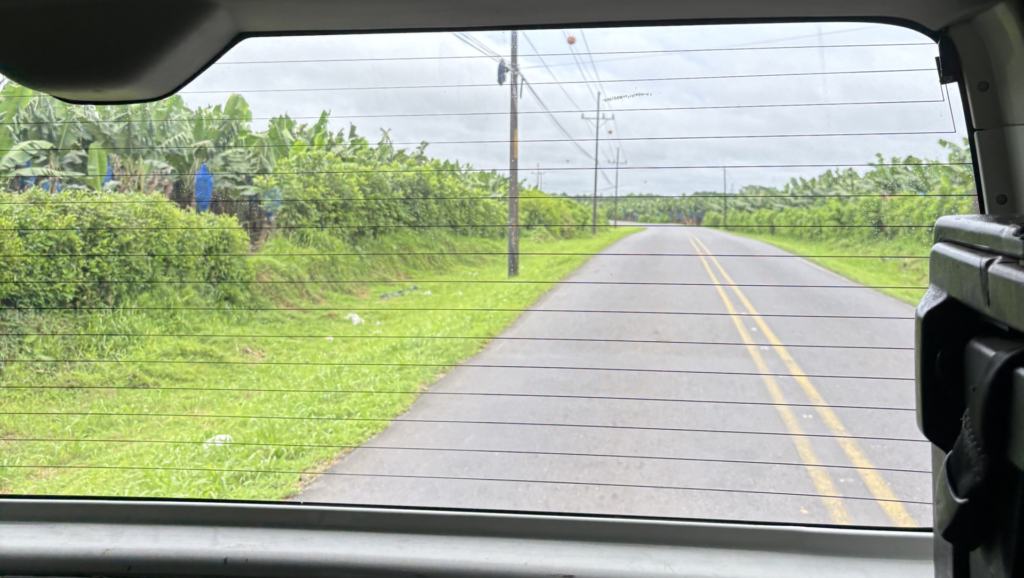
Choosing the right mode of transportation has a significant impact on the course of a round trip. Distances often appear small on the map, but winding roads, poor road conditions, and heavy traffic can make many journeys longer than expected. It is therefore worth allowing plenty of time for transfers.
Public buses
Traveling by bus is the cheapest way to get around Costa Rica. The network is well developed and even reaches smaller towns – perfect for authentic insights into the everyday life of the locals.
Connections from San José are very good, but traveling between other places can be complicated, as it is often necessary to change buses in the capital. Journeys can be long, buses are sometimes crowded, and changing buses is not always easy.
Price: local journeys $1–3, long distances approx. $10
Tip: a basic knowledge of Spanish makes traveling much easier.
Shuttle services
Shuttles connect popular destinations comfortably and faster than buses, often directly from accommodation to accommodation. Disadvantage: The costs are significantly higher.
Price: Shared shuttles approx. $50–100, private $110–320
Rental car
A rental car offers maximum freedom and allows you to take detours off the beaten track. This gives you flexibility, especially in rural areas or national parks. At the same time, you should be prepared for poor road conditions and allow plenty of time for your journeys.
Price: $50-80+ per day for SUVs
Tip: It’s worth booking early.
Flight and ferry
For longer distances or remote regions, domestic flights or ferries are a good option, for example to the Pacific or Caribbean coast. They save time, but flights are significantly more expensive.
Taxis and Uber
Taxis in Costa Rica are convenient, fast, and usually inexpensive—ideal for short distances or as a substitute for public transportation—but sometimes require patience, price negotiations, and caution on poor roads.
Price: short distances from $5, airport transfer to San José approx. $20-30
Note: Uber
Technically, Uber is illegal in Costa Rica, but the law is rarely enforced. During my time there, I never had any problems with it.
Sometimes the driver will ask you to sit in the front passenger seat – this may feel unusual at first, but it helps them feel more comfortable and makes the ride feel less like a classic Uber.

Best time to travel
Costa Rica can be visited all year round, but the weather, landscape, and activities vary greatly depending on the season. There is a clear distinction between the dry season (December to April) and the rainy season (May to November).
Dry season (December–April)
During these months, the weather is warm and mostly sunny, with rain falling only rarely. This makes it ideal for beach days, surfing, or snorkeling on the Pacific coast. On the Caribbean coast, the best months for activities are February to April and September and October.
Inland, too, visibility of animals is usually particularly good, which makes hiking or wildlife viewing easier.
Rainy season (May–November)
During the rainy season, there are usually daily afternoon showers, high humidity, and lush greenery everywhere.
Advantages: nature is lush and vibrant, there are fewer tourists, and accommodation prices are lower. Surfers also benefit from good conditions on the Pacific coast.
The rainy season is also ideal for special wildlife viewing. Leatherback turtles, for example, can be seen between August and November, and whales between July and September.
Conclusion
Every season has its advantages. If you want to enjoy sun and sand, December to April is the best time to visit. For lush nature, peace and quiet, and lower prices, the months from May to November are ideal.

Currency
The official currency in Costa Rica is the Costa Rican colón (CRC). However, US dollars are also accepted in most tourist areas, often at a less favorable exchange rate. Cash is particularly important in rural areas, while larger hotels, restaurants, and shops often accept card payments. It is advisable to carry small bills, as larger amounts are not always accepted, and to pay attention to the fees charged by ATMs.
Other important information before your trip
Language: The official language of Costa Rica is Spanish. Many people in tourist areas speak English, but in rural areas, a basic knowledge of Spanish is extremely helpful, especially when using public transportation or visiting local markets.
Safety: Costa Rica is considered a relatively safe travel destination, but you should still keep an eye on your valuables, especially in cities or on beaches. It is not recommended to walk alone in remote areas at night.
Electricity & plugs: The voltage is 120 V / 60 Hz, as in the USA. Type A and B plugs are used, so an adapter is necessary for European devices.
Water bottles in national parks: Many national parks do not allow disposable plastic bottles. It is best to always carry a reusable bottle and refill it on the go.